Exports: ‘Value-added tea exports need protection’: PA
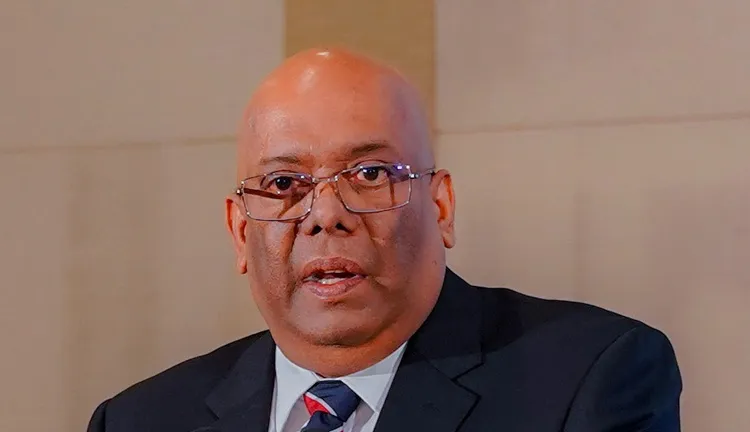
As Sri Lanka’s value-added tea exports commanded more than 50% of total tea export volumes in 2025, with recent key investments made into matcha, green tea and artisanal teas, Sri Lanka Tea Board should protect the emerging high value segment, according to a recent (19) speech made by the newly elected Planter’s Association Chairperson Shanaka Samaradiwakara, at the association’s 172nd Annual General Meeting (AGM).
Accordingly, Samaradiwakara expressed that significant quantities of green tea and other high-value teas remain unsold at auction, while similar products continue to enter the country. “We respectfully request the authorities to review this matter and introduce appropriate measures to support domestic production and value addition,” he stated.
During the AGM, Samaradiwakara who also serves as Malwatte Valley Plantations PLC’s Director and CEO, was appointed as Chairperson of the Planters’ Association of Ceylon (PAC), while Kahawatte Plantations PLC Director/CEO Binesh Pananwala, was appointed the Deputy Chairperson.
The event was graced by Central Bank of Sri Lanka Governor Dr Nandalal Weerasinghe and Sri Lanka Tea Board Chairperson Raj Obeyesekere as Chief Guest and Guest of Honour respectively.
On research and development, he observed that commercially viable alternatives to several essential crop protection products remain limited. Accordingly, he called on the Tea, Rubber and Coconut Research Institutes to lead the development of practical, scientifically proven alternatives, while stressing that disease threatening the rubber industry requires immediate attention. “We cannot afford to repeat the experience of the coffee industry, where coffee blight devastated the sector,” he added.
Turning to issues around land-use policies and productivity, he noted that RPCs have diversified for over two decades in response to changing rainfall patterns, introducing crops such as oil palm, pepper and avocado. He warned that these investments are increasingly being threatened by unsupportive policy, agricultural theft and crop damage by wild animals, costing companies millions of rupees each month in security. “It is imperative that these investments are protected through strong enforcement, appropriate regulatory reforms, and effective measures to address both agricultural theft and crop damage,” he noted.
On irrigation, he appealed to the Government to relax archaic restrictions on groundwater use and simplify approvals for drilling tube wells in order to enhance climate resilience.
Complementing these priorities, Chief Guest Dr Nandalal Weerasinghe stated: “The question before planters is no longer simply how much we produce, but how efficiently we produce, what value we create, and how competitive we will be in global markets 10 or 20 years from now.”
Presenting an overview of the association, outgoing Chairperson Sunil Poholiyadde traced the transformation of the RPC sector over three decades. The association’s 23 RPCs manage approximately 154,000 hectares across tea, rubber, oil palm, coconut and other crops. Since 1995, their capital base has grown from Rs 8 billion to Rs 108 billion, with about Rs 290 billion invested in replanting, mechanisation and factory development.
Looking ahead, Poholiyadde identified labour shortages, rising input costs, climate change, limited mechanisation and uncertainty over tenure as key challenges. With only about 88,500 workers on estates, amounting to 10% of the resident population, he noted that wage adjustments must be aligned with productivity-linked employment models.
With estates home to more than a million residents, the sector continues to play an important role in the lives of the communities it has supported for generations. In his concluding remarks, Samaradiwakara said the association remained committed to building a plantation sector that is “productive, sustainable, competitive, and capable of attracting investments for generations to come”, while continuing to engage constructively with the Government and other stakeholders.
Source: The Morning